Generating State Funds
Last legislative session (2025) I advocated for a bill called SB 156. It was a great gun safety bill that would have established a state office of gun violence prevention. During my work on this bill, I learned firsthand how constrained our legislators are in terms of the budget. The federal government, at that time, had just passed a law colloquially known as the “One Big Beautiful Bill” or OBBA for short. This legislation included major cuts to Affordable Care Act (ACA) subsidies and Medicaid funding, and Nevada has a large number of residents who depend on these programs. Thus, as I spoke to leaders during the session, many were concerned with any bill that had a fiscal impact. Legislators were doing the math in their heads, and they were nervous about how we would manage any potential shortfalls when our budget is already pretty tight to begin with. Despite having a modest fiscal impact, SB 156 had to be amended to completely erase its price tag to garner support. This is just one example in a sea of bills that struggled to move forward due to our tenuous financial situation. We cannot allow this to continue.
I believe that our political moment requires a bold agenda, and that requires a robust budget. My number one priority if elected to office is to increase state revenue, so we can fund the progressive priorities we need. Nevada has no income tax; our revenue streams are limited. This limitation is why we have some of the highest gas tax, sales tax, and car registration fees in the country, which disproportionately burdens the working class. We are also heavily reliant on the federal government, which provides up to a third of our state budget, making us extremely vulnerable in the face of congressional dysfunction and cuts. Changing our tax laws will be difficult–often requiring constitutional amendments– but I will remain steadfast in my pursuit of tax justice.
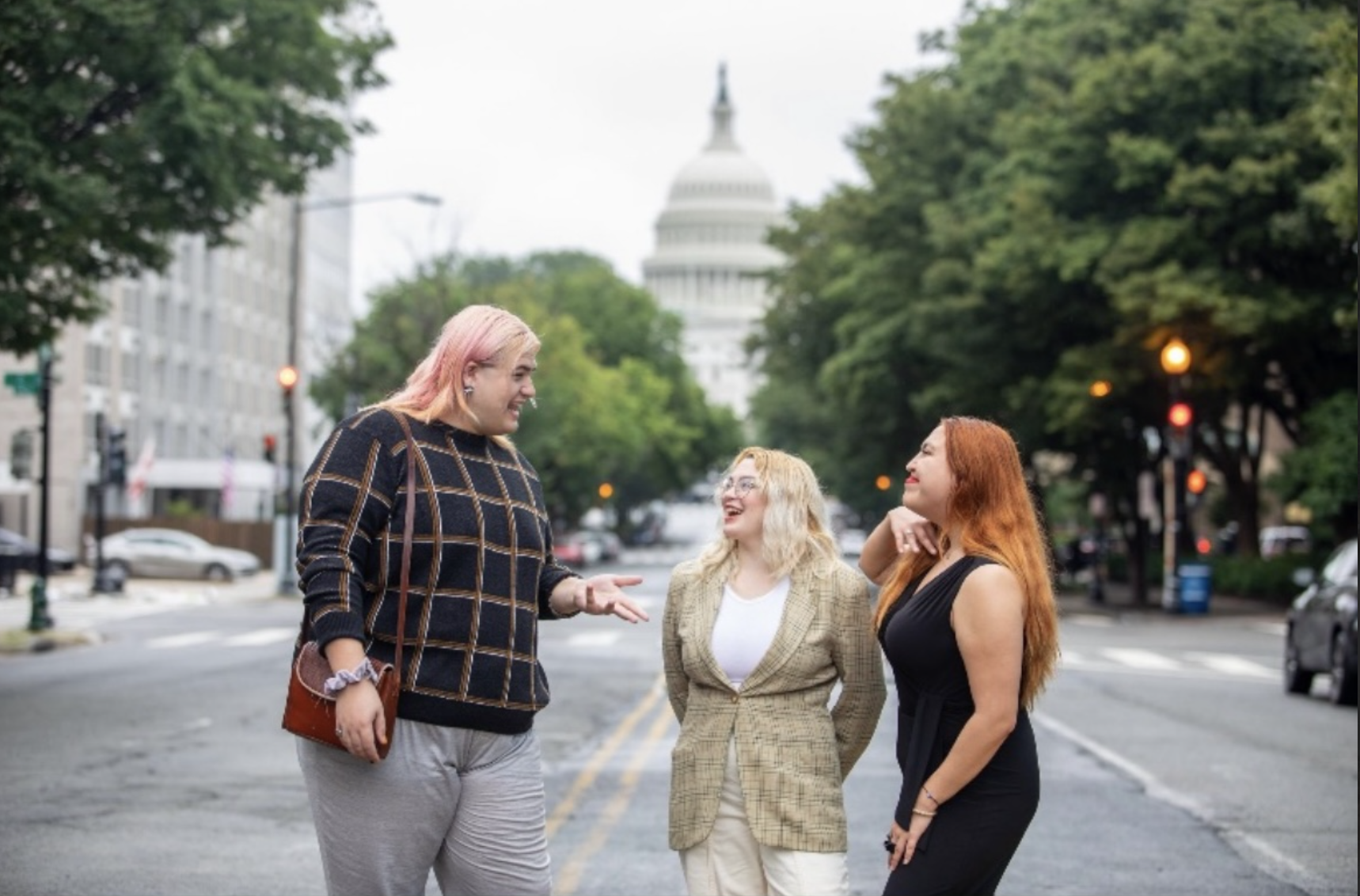
Washington DC - AFY Youth Activist Institute
My hair style may have changed over the years, but my advocacy has been consistent. From Carson City to Washington DC, I have been working for progress.
Policy Priorities
A Fair Share Tax System - I support taxing corporations and the wealthy their fair share. Companies like Amazon drive their vehicles on our public roads, recruit talent from our public universities, and use local police and fire to protect their property and workers. Therefore, these companies should be expected to chip-in! The same is true with our mining industry, who bought themselves a lucrative sweetheart deal in our state constitution all the way back in 1864 to avoid paying their fair share.
Legalize a State Lottery - I also support the legalization of a state lottery, which many states also use as an extra source of revenue, often for higher education (which is exactly what I propose).
From the 83rd Legislative Session →AJR 1: This bill, sponsored by assembly member Anderson, would raise property taxes when a home is sold by resetting its tax value. It would also require that the state create a property tax refund program for the elderly and individuals with disabilities.
Constitutional Amendment to reform the process of legislatively referred constitutional amendments: In order to accomplish some of our ambitious revenue reforms, we are going to need to amend our state constitution. Right now, that is a hefty task. In Nevada, we vote on constitutional amendments twice; it’s a checks-and-balances provision to ensure an amendment isn’t rushed through with an anomaly of political pressure. This is something I both understand and inherently support. My issue, however, belongs to the process for legislatively referred amendments. In order for the legislature to refer an amendment, they must pass a resolution in 2 consecutive legislative sessions (which happen every 2 years) before it can be put on the next ballot for voters to weigh in on (roughly another 1.5 years later). I think it's common-sense to amend this process to allow referrals to continue to the ballot after a single vote by the legislature. The process would still have adequate checks-and-balances, requiring a vote of the legislature and a vote of the people, with time in between for voters to be educated on the proposal. However, the timeline of the process would become more reasonable with this small change.
